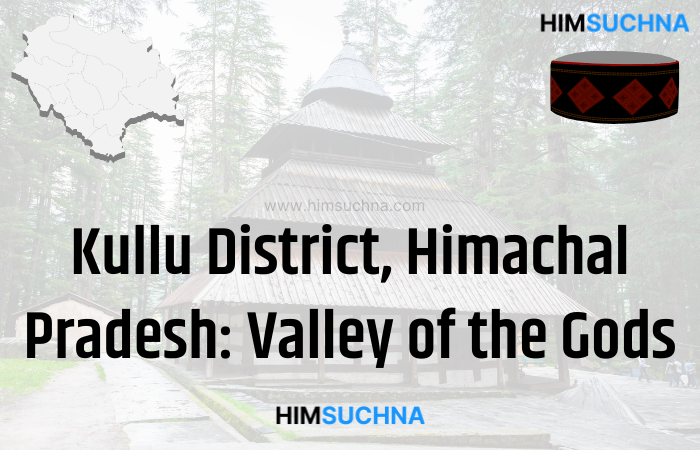
Kullu District, Himachal Pradesh: Valley of the Gods
जिला कुल्लू, हिमाचल प्रदेश: देवताओं की घाटी
परिचय
कुल्लू, जिसे अक्सर “देवताओं की घाटी” कहा जाता है, हिमाचल प्रदेश राज्य का एक सुरम्य जिला है। अपनी अद्भुत प्राकृतिक सुंदरता, समृद्ध सांस्कृतिक विरासत और आध्यात्मिक महत्व के लिए प्रसिद्ध, कुल्लू लंबे समय से यात्रियों, साहसिक प्रेमियों और साधकों का पसंदीदा गंतव्य रहा है। यह जिला हिमालय की गोद में बसा हुआ है और हरियाली से भरी घाटियों, बर्फ से ढकी चोटियों, बहते हुए नदियों और मंत्रमुग्ध कर देने वाले जंगलों से सजा हुआ है।
भौगोलिक स्थिति और जलवायु
कुल्लू हिमाचल प्रदेश के मध्य भाग में स्थित है और यह मंडी, लाहौल-स्पीति, किन्नौर और शिमला जिलों से घिरा हुआ है। यह लगभग 5,503 वर्ग किलोमीटर के क्षेत्र में फैला है और इसकी अक्षांश-देशांश स्थिति 31°58′ N से 32°59′ N और 76°56′ E से 77°52′ E तक है।
यहां की प्रमुख नदी व्यास (ब्यास) है, जो रोहतांग दर्रे के पास व्यास कुंड से निकलती है और घाटी के बीचों-बीच बहती है। इसकी सहायक नदियाँ जैसे पार्वती नदी, इस क्षेत्र की सुंदरता और कृषि उपजाऊता को बढ़ाती हैं।
कुल्लू की जलवायु समशीतोष्ण है। गर्मियों (अप्रैल से जून) में तापमान 10°C से 25°C तक रहता है जबकि सर्दियों (नवंबर से फरवरी) में तापमान शून्य से नीचे चला जाता है। मानसून (जुलाई से सितंबर) में मध्यम से भारी वर्षा होती है।
कुल्लू का इतिहास
कुल्लू का इतिहास प्राचीन काल से जुड़ा हुआ है। एक किंवदंती के अनुसार, यह क्षेत्र कभी दुर्गम था और एक तपस्वी ने इसे खोजा था। महाभारत और रामायण जैसे ग्रंथों में भी कुल्लू का उल्लेख मिलता है। कहा जाता है कि पांडवों ने अपने वनवास के दौरान इस घाटी में समय बिताया था।
यह क्षेत्र कई राजवंशों द्वारा शासित रहा, जिनमें ठाकुर, राणा और स्थानीय राजपूत राजा शामिल थे। कुल्लू राज्य की स्थापना लगभग पहली शताब्दी ईस्वी में हुई और यह 1948 में भारतीय गणराज्य में विलय तक एक रियासत बना रहा।
तिब्बत की निकटता के कारण तिब्बती संस्कृति का प्रभाव भी इस क्षेत्र पर पड़ा, जो यहां के कुछ मठों और बौद्ध समुदायों में देखा जा सकता है।
प्रशासनिक विभाजन
कुल्लू जिले को प्रशासनिक दृष्टि से कई उप-मंडलों, तहसीलों और विकास खंडों में बांटा गया है:
मुख्य उप-मंडल:
- कुल्लू
- मनाली
- बंजार
- आनी
तहसीलें:
- कुल्लू
- सैंज
- मनाली
- बंजार
- आनी
- Nirmand
जिला मुख्यालय कुल्लू शहर में स्थित है। इन विभाजनों से प्रशासनिक कार्य सुचारु रूप से होते हैं।
जनसांख्यिकी
2011 की जनगणना के अनुसार:
- कुल जनसंख्या: 4,37,474
- पुरुष: 2,25,452
- महिलाएं: 2,12,022
- साक्षरता दर: 80.14%
- लिंगानुपात: प्रति 1000 पुरुषों पर 941 महिलाएं
यहां के अधिकांश लोग हिंदू धर्म का पालन करते हैं, लेकिन बौद्ध और सिख धर्म के अनुयायियों की संख्या भी उल्लेखनीय है। यहां के लोग सरल और अतिथि-सत्कार के लिए प्रसिद्ध हैं। अनुसूचित जाति और जनजातियों की जनसंख्या भी पर्याप्त है।
भाषा
यहां की आधिकारिक भाषा हिंदी है, लेकिन स्थानीय बोलचाल में कुल्लवी बोली जाती है। पहाड़ी, पंजाबी और अंग्रेजी भी विशेष रूप से शैक्षणिक संस्थानों और पर्यटन स्थलों पर बोली जाती है। बौद्ध समुदाय तिब्बती भाषा का उपयोग करता है।
संस्कृति और त्योहार
कुल्लू की संस्कृति प्राचीन परंपराओं और आधुनिकता का अनूठा मिश्रण है। यहां के लोक संगीत, नृत्य (नाटी), और मेलों में यह जीवंत संस्कृति दिखाई देती है।
कुल्लू दशहरा
कुल्लू का सबसे प्रसिद्ध त्योहार दशहरा है, जो अक्टूबर में मनाया जाता है। देश के अन्य भागों के विपरीत, यहां रावण के पुतले नहीं जलाए जाते, बल्कि स्थानीय देवताओं का भगवान रघुनाथ जी को श्रद्धांजलि देने के लिए एकत्रित होना इस त्योहार की विशेषता है। सप्ताह भर चलने वाले इस उत्सव में भव्य झांकियाँ, लोक प्रस्तुतियाँ और धार्मिक अनुष्ठान होते हैं।
अन्य प्रमुख त्योहार:
- फागली
- लोसार (तिब्बती नव वर्ष)
- शिवरात्रि
- होली
- दिवाली
कुल्लू की अर्थव्यवस्था
कृषि कुल्लू की अर्थव्यवस्था की रीढ़ है। मुख्य फसलें हैं:
- सेब
- बेर
- नाशपाती
- मक्का
- गेहूं
- जौ
बागवानी, विशेष रूप से सेब उत्पादन ने यहां की अर्थव्यवस्था में क्रांति ला दी है। कुल्लू अब हिमाचल प्रदेश के प्रमुख सेब उत्पादक जिलों में से एक है। फूलों की खेती और जैविक खेती को भी प्रोत्साहन मिल रहा है।
हस्तशिल्प
कुल्लू अपने ऊनी शॉलों और हस्तशिल्पों के लिए प्रसिद्ध है। रंग-बिरंगे डिजाइनों वाले कुल्लू शॉल भारत और विदेशों में निर्यात होते हैं। स्थानीय कारीगर ऊनी टोपी, कालीन और हथकरघा उत्पाद भी बनाते हैं।
पर्यटन
पर्यटन भी यहां की अर्थव्यवस्था में महत्त्वपूर्ण भूमिका निभाता है। हजारों पर्यटक प्राकृतिक सौंदर्य, साहसिक खेल और आध्यात्मिक अनुभवों के लिए यहां आते हैं। होटल, होमस्टे और ट्रैवल एजेंसियों से बड़ी संख्या में रोजगार सृजित होता है।
कुल्लू में पर्यटन
कुल्लू पर्यटकों के लिए एक खजाना है, जो रोमांच, आध्यात्मिकता और प्रकृति की सुंदरता को एक साथ प्रस्तुत करता है।
प्रमुख पर्यटन स्थल:
- मनाली: हनीमून स्पॉट्स और बर्फीली गतिविधियों के लिए प्रसिद्ध हिल स्टेशन।
- सोलंग घाटी: पैराग्लाइडिंग, स्कीइंग और ज़ॉर्बिंग जैसी रोमांचक गतिविधियों के लिए मशहूर।
- रोहतांग दर्रा: गर्मियों में भी बर्फ के दृश्य के लिए प्रसिद्ध।
- ग्रेट हिमालयन नेशनल पार्क: यूनेस्को वर्ल्ड हेरिटेज साइट, ट्रैकिंग और वन्यजीव प्रेमियों के लिए स्वर्ग।
- बिजली महादेव मंदिर: कुल्लू घाटी का सुंदर दृश्य प्रस्तुत करता है।
- नग्गर कैसल: अब एक विरासत होटल और संग्रहालय।
- कसोल: बैकपैकर्स और प्रकृति प्रेमियों के लिए स्वर्ग।
- मलाणा: विशिष्ट सामाजिक संरचना और परंपराओं वाला गांव।
साहसिक गतिविधियाँ:
- ट्रैकिंग
- ब्यास में रिवर राफ्टिंग
- पैराग्लाइडिंग
- कैंपिंग
- माउंटेनियरिंग
- स्कीइंग
- माउंटेन बाइकिंग
- रॉक क्लाइंबिंग
स्थानीय व्यंजन
कुल्लू के पारंपरिक व्यंजन इस क्षेत्र की सादगी और समृद्धता को दर्शाते हैं:
- सिड्डू: भाप में पकाई गई भरी हुई रोटी
- छा गोश्त: तीखा मेमने का मांस करी
- पटांडे: हिमाचली पैनकेक
- तुकड़िया भात: मसालों और दाल से बना चावल व्यंजन
- बबरू: कचौरी जैसा तला हुआ नाश्ता
यहां का स्थानीय सेब साइडर और ट्राउट मछली भी स्वादिष्ट अनुभव प्रदान करते हैं।
शिक्षा और स्वास्थ्य
कुल्लू में प्राथमिक विद्यालयों से लेकर डिग्री कॉलेज तक कई शिक्षण संस्थान हैं:
- गवर्नमेंट डिग्री कॉलेज, कुल्लू
- हिमालयन इंस्टीट्यूट ऑफ टेक्नोलॉजी
- आईटीआई और पॉलिटेक्निक कॉलेज
- CBSE और HPBOSE से संबद्ध निजी स्कूल
स्वास्थ्य सेवाओं में कुल्लू टाउन का क्षेत्रीय अस्पताल प्रमुख है, साथ ही ग्रामीण क्षेत्रों में PHC और CHC उपलब्ध हैं। निजी क्लिनिक और वेलनेस सेंटर भी पर्यटकों को सेवा प्रदान करते हैं।
परिवहन और संपर्क
कुल्लू सड़क, वायु और सीमित रेल मार्ग से जुड़ा हुआ है:
- सड़क मार्ग: NH-3 दिल्ली और चंडीगढ़ से कुल्लू को जोड़ता है। HRTC और निजी बसें नियमित रूप से चलती हैं।
- वायु मार्ग: भुंतर हवाई अड्डा कुल्लू से 10 किमी दूर है, जहाँ से दिल्ली और चंडीगढ़ की उड़ानें उपलब्ध हैं।
- रेल मार्ग: निकटतम रेलवे स्टेशन जोगिंदर नगर है, जो कुल्लू से लगभग 120 किमी दूर है। ब्रॉड गेज कनेक्टिविटी पठानकोट तक उपलब्ध है।
स्थानीय परिवहन में बस, टैक्सी और ऑटो रिक्शा प्रमुख हैं। पर्यटक बाइक और कार भी किराए पर लेते हैं।
पर्यावरणीय महत्व
कुल्लू की पारिस्थितिकी समृद्ध और अद्वितीय है। यहां के जंगल जैव विविधता को संरक्षित रखते हैं। ग्रेट हिमालयन नेशनल पार्क जैसे क्षेत्र हिम तेंदुआ, हिमालयी तहर और वेस्टर्न ट्रैगोपन जैसी दुर्लभ प्रजातियों का घर हैं।
चुनौतियाँ और विकास
कुछ प्रमुख चुनौतियाँ हैं:
- दूरस्थ क्षेत्रों में सीमित बुनियादी ढांचा
- मौसमी पर्यटन के कारण आर्थिक असंतुलन
- अधिक पर्यटन से पर्यावरणीय क्षति
- अपशिष्ट प्रबंधन की समस्याएँ
सरकार और स्थानीय NGO मिलकर सतत विकास के लिए काम कर रहे हैं। नवीकरणीय ऊर्जा, जैविक खेती और इको-टूरिज्म को बढ़ावा दिया जा रहा है।
निष्कर्ष
कुल्लू जिला सिर्फ एक पर्यटन स्थल नहीं, बल्कि एक अनुभव है। इसकी सांस्कृतिक समृद्धि, ऐतिहासिक महत्व, अद्वितीय परंपराएँ और प्राकृतिक सौंदर्य इसे भारत के प्रमुख स्थलों में शामिल करते हैं।
जैसे-जैसे कुल्लू की लोकप्रियता बढ़ रही है, इसके सांस्कृतिक और प्राकृतिक धरोहर को संरक्षित रखते हुए सतत विकास की दिशा में काम करना आवश्यक है।
Kullu District, Himachal Pradesh: Valley of the Gods
Introduction
Kullu, often referred to as the “Valley of the Gods,” is a picturesque district in the state of Himachal Pradesh. Famous for its stunning natural beauty, rich cultural heritage, and spiritual significance, Kullu has long been a favorite destination for travelers, adventure enthusiasts, and seekers. Nestled in the lap of the Himalayas, the district is adorned with verdant valleys, snow-capped peaks, flowing rivers, and mesmerizing forests.
Geographical Location and Climate
Kullu is located in the central part of Himachal Pradesh, surrounded by the districts of Mandi, Lahaul-Spiti, Kinnaur, and Shimla. It spans an area of about 5,503 square kilometers, with its latitude and longitude coordinates ranging from 31°58′ N to 32°59′ N and 76°56′ E to 77°52′ E.
The main river here is the Beas, which originates from the Beas Kund near the Rohtang Pass and flows through the valley. Its tributaries, such as the Parvati River, enhance the beauty and agricultural fertility of the region.
Kullu has a temperate climate. Summers (April to June) see temperatures ranging from 10°C to 25°C, while winters (November to February) can dip below freezing. The monsoon season (July to September) experiences moderate to heavy rainfall.
History of Kullu
The history of Kullu is ancient. According to legend, the region was once inaccessible until a hermit discovered it. Kullu is mentioned in ancient texts like the Mahabharata and Ramayana. It is said that the Pandavas spent time in this valley during their exile.
The area was ruled by various dynasties, including Thakurs, Ranas, and local Rajput kings. The Kullu state was founded around the first century CE and remained a princely state until its merger with the Indian Republic in 1948.
Due to its proximity to Tibet, Tibetan culture has also influenced the region, visible in some monasteries and Buddhist communities.
Administrative Division
The Kullu district is divided administratively into several sub-divisions, tehsils, and development blocks:
Main Sub-Divisions:
- Kullu
- Manali
- Banjar
- Ani
Tehsils:
- Kullu
- Sainj
- Manali
- Banjar
- Ani
- Nirmand
The district headquarters is located in the city of Kullu. These divisions ensure smooth administrative functioning.
Demographics
According to the 2011 Census:
- Total Population: 437,474
- Males: 225,452
- Females: 212,022
- Literacy Rate: 80.14%
- Sex Ratio: 941 females per 1,000 males
The majority of people in Kullu follow Hinduism, but there is also a significant population of Buddhists and Sikhs. The locals are known for their simplicity and hospitality. Scheduled Castes and Tribes also form a significant portion of the population.
Language
The official language of the district is Hindi, but the local dialect, Kulluvi, is widely spoken. Pahari, Punjabi, and English are also commonly spoken, especially in educational institutions and tourist areas. The Buddhist community speaks Tibetan.
Culture and Festivals
The culture of Kullu is a unique blend of ancient traditions and modernity. The region’s folk music, dance (Nati), and fairs reflect its vibrant culture.
Kullu Dussehra
The most famous festival in Kullu is Dussehra, celebrated in October. Unlike other parts of the country, where effigies of Ravana are burnt, in Kullu, local deities gather to pay homage to Lord Raghunath during this festival. The week-long celebrations feature grand processions, folk performances, and religious rituals.
Other major festivals include:
- Fagli
- Losar (Tibetan New Year)
- Shivratri
- Holi
- Diwali
Economy of Kullu
Agriculture is the backbone of Kullu’s economy. The main crops grown are:
- Apples
- Plums
- Pears
- Maize
- Wheat
- Barley
Horticulture, especially apple production, has revolutionized the economy of Kullu, making it one of the major apple-producing districts in Himachal Pradesh. Flower cultivation and organic farming are also gaining momentum.
Handicrafts
Kullu is famous for its woolen shawls and handicrafts. The colorful Kullu shawls are exported across India and abroad. Local artisans also make woolen caps, carpets, and handwoven products.
Tourism
Tourism plays a significant role in the local economy. Thousands of tourists visit Kullu for its natural beauty, adventure sports, and spiritual experiences. The tourism sector generates significant employment through hotels, homestays, and travel agencies.
Tourist Attractions in Kullu
Kullu is a treasure trove for tourists offering adventure, spirituality, and natural beauty.
Major Tourist Spots:
- Manali: A popular honeymoon destination, famous for snow activities.
- Solang Valley: Known for adventure activities like paragliding, skiing, and zorbing.
- Rohtang Pass: Famous for snow views, even in summer.
- Great Himalayan National Park: A UNESCO World Heritage Site, a paradise for trekking and wildlife lovers.
- Bijli Mahadev Temple: Offers beautiful views of the Kullu valley.
- Naggar Castle: Now a heritage hotel and museum.
- Kasol: A haven for backpackers and nature lovers.
- Malana: A village with a unique social structure and traditions.
Adventure Activities:
- Trekking
- River rafting in Beas
- Paragliding
- Camping
- Mountaineering
- Skiing
- Mountain biking
- Rock climbing
Local Cuisine
The traditional cuisine of Kullu reflects the simplicity and richness of the region:
- Siddu: Steamed stuffed bread
- Chha Gosht: Spicy mutton curry
- Patande: Himachali pancakes
- Tukdiya Bhat: Rice dish made with spices and lentils
- Babru: Fried snack, similar to kachori
Local apple cider and trout fish also offer delightful experiences.
Education and Health
Kullu has several educational institutions ranging from primary schools to degree colleges:
- Government Degree College, Kullu
- Himalayan Institute of Technology
- ITI and Polytechnic Colleges
- Private schools affiliated with CBSE and HPBOSE
In health services, the Regional Hospital in Kullu town is the main facility, with PHCs and CHCs available in rural areas. Private clinics and wellness centers also cater to tourists.
Transport and Connectivity
Kullu is well-connected by road, air, and limited rail routes:
- By Road: NH-3 connects Kullu with Delhi and Chandigarh. Regular buses operated by HRTC and private services are available.
- By Air: Bhuntar Airport, 10 km from Kullu, offers flights to Delhi and Chandigarh.
- By Rail: The nearest railway station is Joginder Nagar, about 120 km from Kullu. Broad gauge connectivity is available up to Pathankot.
Local transport includes buses, taxis, and auto-rickshaws. Tourists often rent bikes and cars.
Environmental Significance
The ecology of Kullu is rich and unique. Its forests preserve biodiversity. Areas like the Great Himalayan National Park are home to rare species such as the snow leopard, Himalayan tahr, and Western tragopan.
Challenges and Development
Some major challenges include:
- Limited infrastructure in remote areas
- Economic imbalance due to seasonal tourism
- Environmental damage due to excessive tourism
- Waste management issues
The government and local NGOs are working together for sustainable development, promoting renewable energy, organic farming, and eco-tourism.
Conclusion
Kullu district is not just a tourist destination, but an experience. Its cultural richness, historical significance, unique traditions, and natural beauty place it among India’s premier spots. As Kullu’s popularity continues to grow, it is essential to work toward sustainable development while preserving its cultural and natural heritage.